Disclosure: As an Amazon Associate I earn from qualifying purchases. This does not change your price. Product prices, availability, ingredients, and nutrition details can change, so verify current information before buying or relying on a food product.
These are researched product choices, not hands-on test results. We checked manufacturer information and listing identity. Use what you already own when it does the job; check the exact variant, seller, price, and return terms before buying.
Start with portions
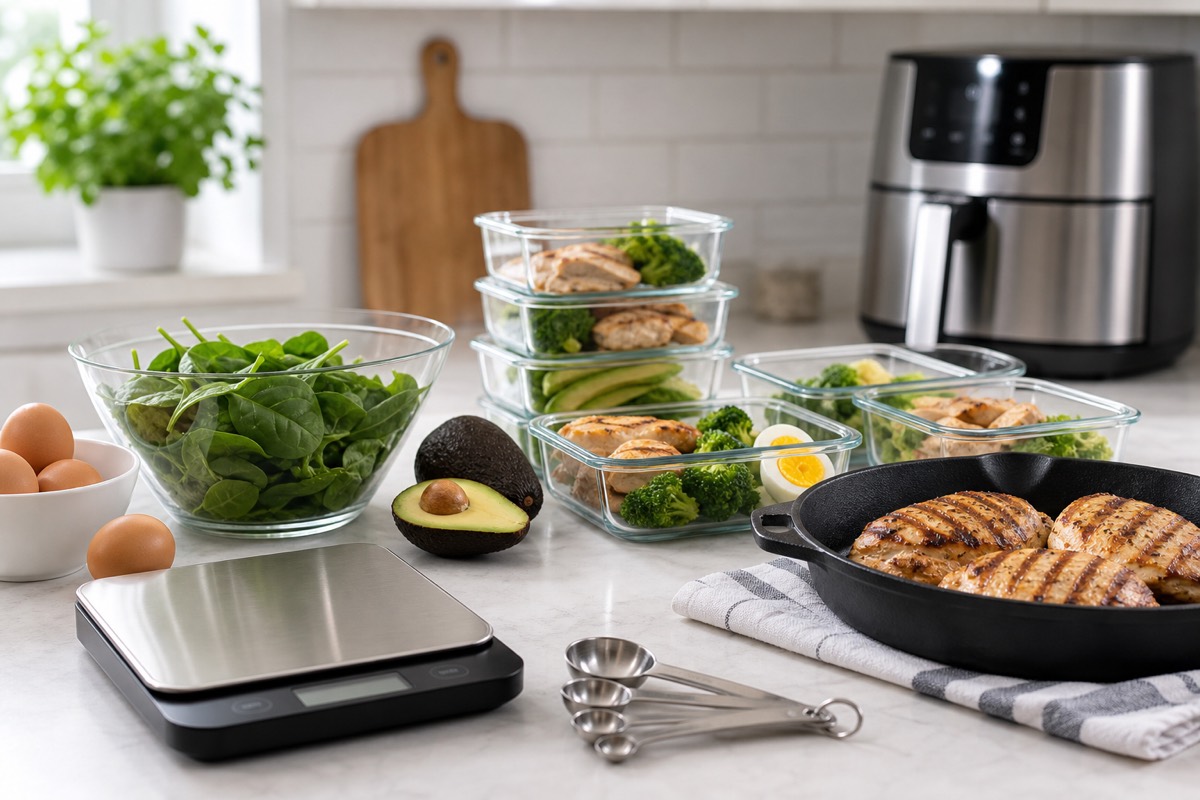
Escali Primo digital scale
A simple two-button scale for weighing cheese, nuts, yogurt, and recipe ingredients. Tare lets you subtract the bowl before adding food.
Good fit: everyday gram-based portions. Tradeoff: it measures weight, not carbs; you still need the food label.
Pack planned leftovers
Rubbermaid Brilliance glass containers
The 4.7-cup glass container set gives a packed meal a defined home. This listing is the three-container set with lids.
Good fit: fridge-to-lunch meal prep. Tradeoff: glass adds weight. Follow the manufacturer’s separate heating instructions for bases and lids.
Cook repeatable dinners
Lodge 12-inch cast iron skillet
A seasoned skillet for burger patties, chicken, and vegetable sides. A useful option if you want one pan for stovetop and oven cooking.
Good fit: people comfortable caring for cast iron. Tradeoff: a heavy pan with a hot handle; dry it promptly and maintain the seasoning.
Check cooking temperatures
OXO Chef’s Precision digital thermometer
An instant-read probe with a pivoting head and Fahrenheit/Celsius display. Check the center of cooked food instead of relying on its color.
Good fit: checking individual portions. Tradeoff: this is an instant-read tool, not a probe to leave in the oven.